
Clothing tech pack: example and contents
A tech pack is the document that turns your design into something a factory can actually produce. You will also hear it called a spec sheet, a specification package or, in French, a fiche technique or dossier technique — these all mean the same thing. Whatever the name, it is the contract between your idea and the workshop's machines.
This guide explains what a complete tech pack contains, why manufacturers insist on it, and how to get one without hiring a freelance pattern maker.
What a tech pack contains
A professional tech pack covers everything the factory needs to cut, sew, finish and pack your garment. Missing information means questions, delays and mistakes — a complete tech pack means a fast, accurate quote.
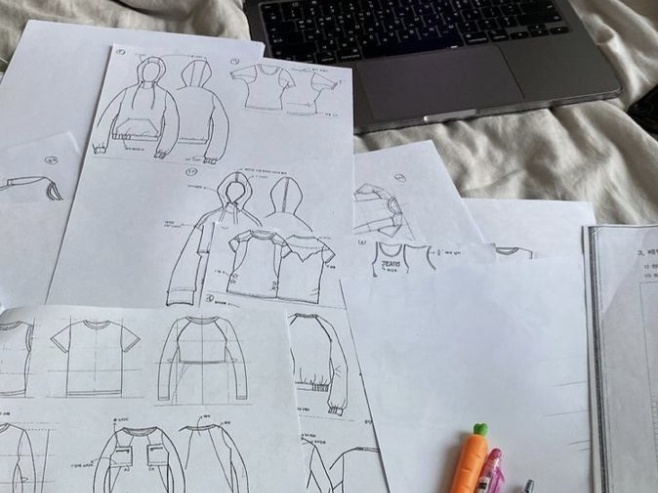
- Technical drawing (flat sketch): front and back views, with every detail visible — pockets, zips, drawcords, topstitching.
- Measurements: the full size chart with points of measure (chest, length, sleeve, shoulder…) and tolerances for each size.
- Materials: fabric composition, weight (GSM), colour references, plus trims — threads, buttons, zippers, drawcords, elastics.
- Construction and stitching: seam types, stitch density, reinforcement points, hems and finishes.
- Labels and branding: main label, care label, size label, hangtags — their artwork, material and exact placement.
- Packaging: folding instructions, polybags, cartons and any branding on the packaging itself.
Why the factory needs it
Factories produce dozens of styles for dozens of brands at once. They cannot guess your intentions, and they should not: a measurement left unspecified will be decided by someone who has never seen your vision. The tech pack removes interpretation. It is also the basis of the quote — a factory prices a garment from its tech pack, not from a photo.
During production, the same document becomes the quality reference: inspectors check the finished pieces against the tech pack's measurements and construction notes.
Tech pack, spec sheet, dossier technique: same thing
The industry uses several names for this document. "Tech pack" is the most common in English; "spec sheet" (specification sheet) is frequent too; in French you will hear "fiche technique" or "dossier technique". They all designate the same document. If a factory asks for any of them, this is what they mean.
An example generated by Atelia
Atelia generates your tech pack directly from your design. You describe the garment, the AI draws it, and the app then guides you through every field the factory expects: measurements per size, fabric and trims, stitching, labels. The result is a clean, professional document you can send to a manufacturer as-is.
A freelance pattern maker typically charges between $85 and $750 per tech pack. With Atelia, a complete tech pack costs 15 credits — a few euros depending on your pack or subscription — and takes minutes instead of days of back-and-forth.
Piece-specific tech packs
Every garment type has its own critical measurements and details. A t-shirt lives and dies by its collar rib and shoulder fit; a hoodie adds a hood, a kangaroo pocket and drawcords. We wrote dedicated guides for the two most common first pieces:
- T-shirt tech pack: measurements and details specific to tees.
- Hoodie tech pack: measurements and details specific to hoodies.
What happens without a tech pack
Brands that skip the tech pack all tell the same story. The quote comes back vague, because the factory priced a guess. The sample arrives wrong, because "regular fit" meant something different to the pattern maker. The production run drifts from the sample, because there was no written reference to hold it to. Every one of these problems costs more than the document that would have prevented it.
The tech pack is also your protection: when a finished piece does not match the agreed measurements, the document is what makes the conversation simple.
How long does it take?
A freelance pattern maker typically needs several days to a week per tech pack, plus the back-and-forth to explain your garment. With Atelia, the document is generated from the design you already created: you review the guided fields, adjust the measurements and materials, and export. Most founders finish their first tech pack in under an hour.
From tech pack to quote
Once your tech pack is complete, it becomes a working tool. Send the same document to two or three factories and the quotes you receive are finally comparable — same measurements, same materials, same construction. The factory prices the fabric from your GSM and composition, the labour from your construction notes, and the extras from your labels and packaging. When a quote comes back, any question about it refers to a line in the tech pack, not to a vague memory of a conversation.
This is also when the document starts paying for itself: factories answer complete tech packs first, because they signal a serious, prepared client.